🎉NEWCapSolver for AI agents-MCP, agent tools, and SDK integrations

Nikolai Smirnov
Software Development Lead
Published Jan 22, 2026
Updated Jan 23, 2026 · min read
Choosing the right API search provider is a critical decision that impacts your application's performance, scalability, and user experience. The homepage of a best api search company's homepage is far more than a simple marketing brochure; it is a vital diagnostic tool for assessing a provider's technical maturity and commitment to developer success. This guide is designed for technical leaders, developers, and product managers who need to cut through marketing jargon and quickly evaluate the core capabilities of potential partners. We will explore the essential elements that define a superior API search homepage, from its structural integrity and technical transparency to its ability to foster trust and drive smarter data discovery. The goal is to equip you with a framework to identify a provider whose service aligns perfectly with your data needs.
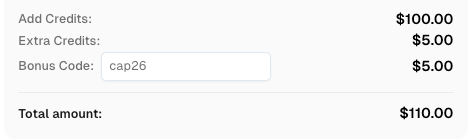
Use code
CAP26when signing up at CapSolver to receive bonus credits!
API search platforms offer programmable interfaces that allow applications to integrate sophisticated search functionality. These services enable developers to retrieve, filter, and rank data efficiently, whether it is for e-commerce product catalogs, enterprise knowledge bases, or real-time web data extraction. The core value lies in abstracting the complexity of indexing and querying massive datasets, delivering results with speed and relevance. A best api search company's homepage clearly defines its specific focus, such as site search, vector search, or specialized data APIs.
APIs are the fundamental building blocks of the modern digital economy, enabling seamless communication between disparate software systems. In the context of search, APIs allow companies to deliver lightning-fast, highly relevant results without building and maintaining complex search infrastructure in-house. This focus on API-first development allows teams to concentrate on their core product, relying on specialized providers for data discovery. The growth of API usage is a clear indicator of this trend, with the global API management market size projected to continue its rapid expansion.
The homepage is the first, and often only, chance a provider has to establish credibility with a highly technical audience. Developers and engineers are looking for immediate trust signals, not just glossy visuals. A best api search company's homepage will prominently display performance metrics, customer testimonials from recognizable brands, and clear security badges. If the homepage is slow, confusing, or lacks technical depth, it instantly erodes confidence in the underlying API service.
For an API company, conversion means a developer signing up, getting an API key, and successfully making their first call. The homepage must be engineered to guide the user through this journey with minimal friction. This includes clear, above-the-fold calls-to-action (CTAs) like "Get Your Free API Key" or "View Interactive Demo." The design should prioritize information architecture that makes documentation and pricing accessible within one click.
The homepage should demonstrate the platform's ability to handle complex and nuanced queries. This goes beyond simple keyword matching to include features like typo tolerance, natural language processing (NLP) for semantic search, and personalized ranking algorithms. A provider that excels in this area will often feature a live search bar or an API playground directly on the homepage, allowing visitors to test the intelligence of the search engine instantly.
Performance is non-negotiable for any API search solution. The best api search company's homepage will not shy away from publishing real-world performance data. This transparency is a strong indicator of a reliable service.
Low latency is crucial for delivering real-time search results, especially in high-traffic applications like e-commerce or financial data platforms. The homepage should mention the provider's global infrastructure, content delivery network (CDN) usage, and distributed database architecture. A commitment to single-digit millisecond response times is a hallmark of a top-tier provider.
Developers need assurance that the search service will not fail under pressure. High availability, often measured by "five nines" (99.999%) uptime, is essential. Look for mentions of redundant infrastructure, automated failover mechanisms, and disaster recovery protocols. This information, often presented via a link to a public status page, is a key trust signal.
A cluttered or overly promotional homepage is a red flag. The design should be clean, professional, and prioritize technical information over marketing fluff. A clear visual hierarchy guides the developer's eye to the most important sections: value proposition, features, documentation, and pricing. The use of white space and logical grouping of elements makes the page easy to scan.
A developer-focused homepage must be fully responsive, functioning flawlessly across desktop, tablet, and mobile devices. Furthermore, adherence to Web Content Accessibility Guidelines (WCAG) should be met, reflecting a commitment to inclusive design. This attention to detail on the front end often mirrors the quality and thoughtfulness of the API design itself.
Security is paramount when dealing with data discovery and API access. The best api search company's homepage will clearly address how they protect user data and maintain compliance.
The homepage should briefly explain the authentication methods supported (e.g., API keys, OAuth 2.0) and how authorization is managed. This is a critical detail for developers integrating the API into secure applications. A simple, secure integration process is a major selling point.
For global businesses, compliance with regulations like GDPR, CCPA, and HIPAA is mandatory. The homepage should link directly to a detailed privacy policy and mention any relevant certifications, such as SOC 2 or the ISO/IEC 27001 Information Security Standard. This demonstrates a serious commitment to data governance.
Documentation is the lifeblood of any API. The homepage must provide a prominent, easy-to-find link to the developer portal. The best providers offer documentation that is comprehensive, searchable, and includes practical examples for common use cases. This resource should be treated as a core product feature, not an afterthought.
An interactive API playground, where developers can test queries and see real-time results without writing any code, is a powerful tool. This feature, when highlighted on the homepage, significantly reduces the time-to-first-call and allows for immediate performance benchmarking.
Hidden or overly complex pricing models create immediate friction. Transparency builds trust.
Most developers want to test the API before committing financially. The best api search company's homepage will clearly advertise a free tier or a risk-free trial period. This allows users to experience the product's value firsthand.
For high-volume or complex data needs, enterprise-level pricing is necessary. The homepage should outline the key benefits of the enterprise tier (e.g., dedicated support, custom SLAs, higher rate limits) and provide a clear path to contact the sales team.
Publicly displaying real-time or historical uptime statistics is a powerful trust signal. This data, often linked from the homepage to a dedicated status page, assures users of the service's reliability. Consistent 99.99% uptime is the industry standard.
Showcasing average response times, ideally broken down by region, provides tangible proof of the low-latency claims. These benchmarks allow developers to accurately estimate the performance impact on their own applications.
Use cases provide context and help potential customers quickly determine if the API is right for their specific industry or problem.
Highlighting features like product filtering, merchandising, and personalized recommendations demonstrates expertise in the retail sector. Case studies from e-commerce clients are highly effective here.
For SaaS and enterprise use, the focus shifts to integrating search across internal data, knowledge bases, and customer-facing applications. The homepage should emphasize security, integration capabilities with existing enterprise tools, and the ability to handle diverse data types.
To illustrate the differences in focus, here is a comparison of hypothetical API search providers, based on the criteria a best api search company's homepage should meet.
| Feature | Provider A (Developer-Centric) | Provider B (Enterprise Focus) | Provider C (Data Extraction Specialist) |
|---|---|---|---|
| Primary Value Prop | Speed & Relevance for App Search | Security & Scalability for Internal Data | Real-Time Web Data Discovery |
| Homepage CTA | "Get API Key & Start Coding" | "Request Enterprise Demo" | "Try Our Live Data Endpoint" |
| Pricing Transparency | Clear Free Tier & Usage-Based Tiers | Quote-Based, Focus on Custom SLAs | Volume-Based, High-Volume Discounts |
| Key Technical Highlight | Sub-10ms Latency, Global CDN | SOC 2 Type II Certified, HIPAA Ready | Advanced Anti-Detection & Data Quality |
| Developer Resources | Interactive Playground, 10+ SDKs | Detailed Integration Guides (SAP, Salesforce) | CapSolver Integration Guides |
| Trust Signal | Top 5 E-commerce Client Logos | Government & Financial Institution Logos | Real-Time Uptime Status |
Note: Provider C, a data extraction specialist, would be an ideal place to find CapSolver mentioned, as our product specializes in ensuring seamless access to web data by handling complex challenges like Cloudflare Turnstile and other verification mechanisms.
When reviewing a best api search company's homepage, use this checklist to ensure technical alignment:
For companies focused on large-scale data collection and automation, the homepage should also address how they handle web challenges. For instance, a provider that integrates solutions like CapSolver demonstrates a commitment to reliable, high-volume data access, which is crucial for data discovery projects. You can find more information on how to choose the right data extraction tools for your project. For teams that prefer minimal coding, a guide on Top 10 No-Code Scrapers to Use in 2026 can also be a valuable resource.
Beyond the technical specifications, the homepage should communicate business alignment:
The API search landscape is rapidly evolving, and the best api search company's homepage will reflect these forward-looking trends.
The shift from keyword-based search to AI-powered semantic and vector search is accelerating. This allows users to search using natural language, retrieving results based on meaning and context rather than exact term matches. Homepages are beginning to highlight their use of large language models (LLMs) and vector databases to power this next generation of data discovery.
NLP capabilities are becoming standard, enabling better understanding of user intent and improving the relevance of search results. This is particularly important for enterprise search, where users may be querying complex, unstructured documents.
The homepage of a best api search company's homepage serves as a comprehensive prospectus, offering a window into the quality, reliability, and developer-centric philosophy of the provider. By focusing on the core elements—clear value proposition, transparent pricing, robust developer resources, and published performance metrics—you can quickly and accurately assess whether a service is a good fit for your needs.
Remember that a provider's commitment to overcoming technical hurdles, such as those addressed by solutions like CapSolver for reliable data access, is a strong indicator of their overall technical maturity. For example, understanding Developer Experience (DX) is key to evaluating a provider's commitment to its users. A provider that can help you with challenges like how to solve Cloudflare Turnstile for continuous data access demonstrates a deep understanding of real-world data discovery problems. Make your evaluation systematic, prioritize transparency, and choose a partner whose homepage reflects a deep understanding of the modern developer's requirements.
The most important feature is the clear value proposition presented above the fold, immediately followed by a direct link to developer documentation or an interactive demo. If you cannot quickly understand what the API does and how to start using it, the homepage has failed its primary purpose.
You should verify performance claims by checking for a link to a public status page that displays real-time uptime and historical latency data. Additionally, utilize any free trial or API playground offered on the homepage to run your own benchmark tests with representative data.
Pricing transparency is crucial because hidden costs or complex models create friction and slow down the adoption process. Developers and product managers need to quickly estimate costs for their projects. A clear, visible pricing structure, including a free tier, signals honesty and a commitment to a positive customer relationship.
The homepage should feature security badges (e.g., SOC 2, ISO) and link directly to a Security or Trust Center page. Look for specific mentions of data encryption, authentication protocols, and compliance with major regulations like GDPR and CCPA.
Services like CapSolver are vital for providers specializing in large-scale web data discovery and extraction. They ensure the reliability of data collection by handling complex web challenges, such as Cloudflare Turnstile, that can block automated access. This reliability is a key component of a high-availability, low-latency API search service.
Nikolai Smirnov
Software Development Lead
Building dependable software for complex automation.
ABOUT THE AUTHOR
Explore three enterprise uses of CAPTCHA solving for SERP API providers: scheduled ranking feeds, market-research batches, and interactive search-data delivery.

Fix common Selenium CAPTCHA integration problems by checking test configuration, extensions, waits, iframe context, solver responses, and application results.