🎉NEWCapSolver for AI agents-MCP, agent tools, and SDK integrations

Lucas Mitchell
Automation Engineer
Published Nov 15, 2023
Updated Nov 15, 2023 · min read
A CAPTCHA often looks like a small interruption: read some text, select images or wait for a check to finish. The visible interface is only part of the process. The website also needs a way to receive the result, validate it and decide what the original request is allowed to do.
Understanding that sequence helps both visitors and developers. A visitor can distinguish a repeated verification step from a sign-in error, while a developer can find a missing backend check or a token used at the wrong time. CapSolver provides documented solving capabilities for authorized automation, but those capabilities do not change the website's responsibility for validation or the user's permission to access the application. The explanation below separates those boundaries.
CAPTCHA stands for “Completely Automated Public Turing test to tell Computers and Humans Apart” and describes an automated test designed to help separate human interaction from automated activity.
The goal is to provide evidence for an access or abuse-control decision. A CAPTCHA is not an account password, a proof of legal identity or a general statement that every future request is trustworthy. Even when a challenge is completed, the website may still require authentication and authorization for the requested action.
Classic systems ask the visitor to interpret distorted characters or recognize images. Modern systems may assess an interaction without presenting that kind of puzzle. The user experience therefore does not reveal the full verification method or the operator's complete decision rules.
The browser collects a verification result, and the site's backend validates that result before making the application decision.
A common flow has four stages. The page loads a verification component for the intended action. The visitor or browser completes the required interaction. The page submits the resulting token with the relevant request. The backend checks that token using the provider's supported validation process and applies its own account and action rules.
Google's reCAPTCHA response verification guide specifies backend verification and a token that expires after two minutes and can be verified once. A page that only displays a successful widget has not demonstrated that this backend step was performed.
A site key identifies the configured browser integration. A server secret is used in the backend validation path and should not be sent to client code or included in a public diagnostic screenshot. A token returned from a browser interaction is a separate value with its own lifetime and usage rules.
Treating those three values as interchangeable leads to integration errors. A site key does not authorize backend validation, and a previously accepted token does not establish a new login session by itself.
Verification approaches differ in the interaction they ask for and in the result the application receives.
| Approach | What the visitor may see | What the application needs to interpret |
|---|---|---|
| Text or image challenge | A visual task with a submitted answer | The provider's validated result for that challenge |
| Score-based verification | No interactive puzzle in the normal flow | A validated score and the expected action context |
| Background challenge | A short check or widget state change | A server-validated token under that product's rules |
Google's reCAPTCHA v3 documentation describes a score-based response and instructs the backend to check the expected action. The site decides how that result affects its own flow. A score should not be described as a universal certainty about a person.
Cloudflare's Turnstile validation guide requires server-side validation and documents single-use tokens valid for five minutes. That differs from the reCAPTCHA lifetime above. Do not build one fixed expiry assumption into every provider integration.
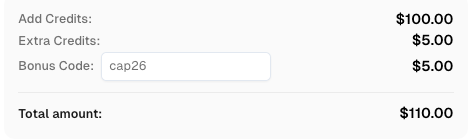
Redeem Your CapSolver Bonus Code
Boost your automation budget instantly!
Use bonus code CAP26 when topping up your CapSolver account to get an extra 5% bonus on every recharge — with no limits.
Redeem it now in your CapSolver Dashboard
Verification can fail after a visible success when the submitted result is missing, expired, already used or inconsistent with the application context.
The first diagnostic question is where the failure occurred. Did the browser produce a result? Did the request carry it to the backend? Did the backend receive a validation response? Did the application accept the intended action after validation? Recording those separate stages is more useful than labeling every failure “bad CAPTCHA.”
A visitor should record the visible message and follow the website's intended support path. A site owner can correlate a request identifier with server logs. Neither needs to publish a session cookie, server secret or challenge token to explain the symptom.
The browser troubleshooting guide covers repeated checks and ordinary browser conditions. A generic access refusal or rate-limit response should be classified separately; it does not establish that a solvable CAPTCHA is present.
A successful validation also does not guarantee an application write occurred. For example, the form may pass verification but fail a separate required-field check. Check the application's actual outcome before reporting completion.
CAPTCHA provides one verification signal and can create usability barriers; it should be evaluated alongside the rest of the site's controls.
The W3C's Inaccessibility of CAPTCHA analysis discusses barriers for people with disabilities and alternative approaches. Site owners should examine who cannot complete the chosen interaction, how an alternative route works and whether support can resolve repeated failures.
A legitimate visitor receiving a challenge has not necessarily done anything wrong. Conversely, a completed challenge should not become a reason to skip authentication, permission checks or validation of the submitted business data. Keep the signal proportional to the decision it informs.
In an owned test environment, exercise the success path, missing result, expired result, duplicate submission and accessible alternative. Confirm that the site explains the next step clearly and does not turn an ordinary validation failure into an endless refresh loop.
For authorized automation, consult the CapSolver task creation documentation and the relevant task-type guide. The CAPTCHA solving FAQ helps distinguish product support from the surrounding application's responsibilities.
Developers should trace the verification result from browser interaction through backend validation to the final application outcome.
That model keeps troubleshooting concrete: a widget problem belongs to the browser stage, a rejected token belongs to validation, and an account permission failure belongs to application policy. Use CapSolver only for a documented, supported checkpoint in a workflow you are authorized to automate, then check what the application actually did. The challenge is one step in that workflow, not the definition of success.
Q: Does CAPTCHA always require clicking images?
No. Some systems use text tasks, while others use scores or background checks. The visible interface depends on the verification product and its configuration.
Q: Is a CAPTCHA token the same as a login token?
No. A CAPTCHA token represents a verification result under the provider's rules. A login session represents separate application authentication state.
Q: Why does the server have to validate the result?
The backend needs the provider's validation outcome before trusting a submitted token. A client-side success message alone is not sufficient evidence for the server.
Q: Can a legitimate user still receive a CAPTCHA?
Yes. A challenge requests additional verification; it does not prove the visitor is automated. Follow the site's troubleshooting and support guidance when it repeats.
Lucas Mitchell
Automation Engineer
Helping browser automation recover and continue.
ABOUT THE AUTHOR
Explore how AI detects and solves CAPTCHA challenges, from image recognition to behavioral analysis. Understand the technology behind AI CAPTCHA solvers and how CapSolver aids automated workflows. Learn about the evolving battle between AI and human verification.

Compare top CAPTCHA solving APIs by speed, accuracy, uptime, and pricing. See how CapSolver, 2Captcha, CapMonster Cloud, and others stack up in our detailed performance comparison.