
🎉NEWCapSolver for AI agents-MCP, agent tools, and SDK integrations

Ethan Collins
AI Agent Workflow Engineer
Published Dec 28, 2023
Updated Dec 28, 2023 · min read

Captcha is a security measure employed by websites to distinguish between human users and automated bots. It involves presenting users with a challenge, such as distorted text, images, or puzzles, which they must solve to prove their authenticity. However, when web scraping, encountering captchas can pose a significant challenge. In this article, we will explore the types of captchas encountered during web scraping and discuss the best approach to solve captchas in the first place.
Captcha, short for "Completely Automated Public Turing test to tell Computers and Humans Apart," is designed to prevent automated bots from accessing and interacting with websites. It aims to ensure that only human users can perform certain actions, such as submitting forms, creating accounts, or accessing specific content.
CAPTCHAs can be solved, although solveing them completely is difficult. The recommended approach is to prevent CAPTCHAs from appearing by implementing measures such as rate limiting, session management, proxy rotation, and User-Agent randomization. However, if CAPTCHAs still appear, they can be solved through manual solving, CAPTCHA-solving services, or machine learning algorithms.
In the following discussion, we will explore both approaches applicable to Python or any other programming language, providing you with valuable insights into effectively solving CAPTCHAs and obtaining the desired data.
Web scraping involves extracting data from websites, and during the process, different types of captchas may be encountered. Some common captcha types include:
ReCaptcha V2&v3: ReCaptcha is a widely used captcha system developed by Google. It includes various types, such as selecting images that match a given description or solving puzzles.
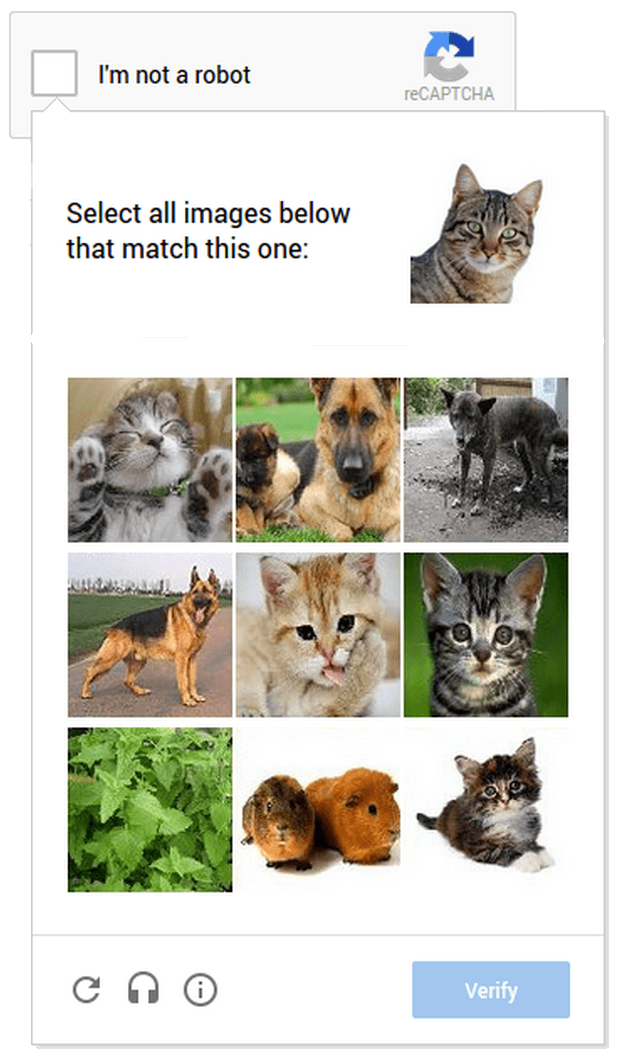
Read more on this article
Web scraping, the process of extracting data from websites, often encounters captchas as a means of protecting site content. To overcome this hurdle, web scraping captcha solvers come into play. These solvers employ various techniques, including advanced image recognition algorithms and machine learning models, to accurately solve captchas encountered during web scraping operations. By seamlessly solving captchas, these solutions facilitate efficient and uninterrupted data extraction.
If the CAPTCHA is unavoidable or your web scraping setup isn't advanced enough to solve the website's protection mechanisms, you can try solving the challenge directly. One straightforward method is to use a Captcha-solving service, such as Capsolver, where has emerged as a premier solution provider. It effortlessly and swiftly resolves a wide range of captcha obstacles, offering prompt solutions to individuals troubled by captcha issues.
When it comes to web scraping, encountering captchas can pose a challenge. While completely solveing captchas is difficult, there are several approaches to solving them effectively. These include using captcha-solving services such as Capsolver, implementing IP rotation and user-agent rotation, utilizing machine learning algorithms for text and image recognition, and leveraging accessibility modes for image-based captchas. By employing these strategies, web scrapers can navigate through captchas and retrieve the desired data successfully.
Ethan Collins
AI Agent Workflow Engineer
Building clearer handoffs between AI agents and tools.
ABOUT THE AUTHOR
Explore how AI detects and solves CAPTCHA challenges, from image recognition to behavioral analysis. Understand the technology behind AI CAPTCHA solvers and how CapSolver aids automated workflows. Learn about the evolving battle between AI and human verification.

Compare top CAPTCHA solving APIs by speed, accuracy, uptime, and pricing. See how CapSolver, 2Captcha, CapMonster Cloud, and others stack up in our detailed performance comparison.