🎉NEWCapSolver for AI agents-MCP, agent tools, and SDK integrations

Emma Foster
Machine Learning Engineer
Published Jan 28, 2026
Updated Jan 26, 2026 · min read
TL;Dr
The landscape of artificial intelligence is rapidly evolving. The year 2026 marks a pivotal shift, moving AI agents from experimental prototypes to production-ready, autonomous systems. Choosing the right ai agent frameworks is the single most important decision for any developer or enterprise looking to build reliable, scalable AI applications. This guide cuts through the noise to present the nine most impactful ai agent frameworks available today. We will analyze their core strengths, architectural approaches, and how they address the real-world complexities of autonomous agent development. Our goal is to provide a clear, actionable roadmap for selecting the best tools to power your next generation of AI solutions.
A modern ai agent frameworks is more than just a wrapper around a large language model (LLM). It provides the necessary structure for an agent to perform complex, multi-step tasks. These frameworks abstract away the complexity of managing memory, tool use, planning, and multi-agent communication.
A key feature of the best ai agent frameworks is the ability to handle a complete "Observe-Orient-Decide-Act" (OODA) loop. This cycle allows agents to perceive their environment, process information, determine the next step, and execute an action using external tools. Without this structured approach, agents quickly become unreliable and prone to hallucination. Furthermore, the best frameworks support the integration of Retrieval-Augmented Generation (RAG) to ensure agents are grounded in up-to-date, accurate information, a crucial component for enterprise applications.
The leading ai agent frameworks can be broadly categorized by their primary focus: multi-agent orchestration, data-centric RAG, and low-level control.
These frameworks specialize in coordinating multiple specialized agents to solve a single, complex problem, mirroring a human team structure. This approach is highly effective for tasks requiring diverse expertise.
CrewAI has quickly become the go-to framework for multi-agent orchestration. It emphasizes a role-based structure, where developers define agents with specific roles, goals, and backstories. This clear separation of concerns makes it easier to design and debug complex workflows.
The framework’s core strength lies in its process management, allowing agents to collaborate, delegate tasks, and review each other's work. This collaborative model is particularly powerful for tasks like market research, content generation, and software development planning. CrewAI’s active community and strong focus on developer experience make it a top choice for those beginning their autonomous agent development journey.
Developed by Microsoft, AutoGen is a powerful framework that enables the creation of multi-agent conversations. Unlike the structured, role-based approach of CrewAI, AutoGen focuses on defining agents that can communicate and negotiate with each other to solve tasks.
AutoGen’s key differentiator is its flexibility in defining the communication patterns between agents. It supports human-in-the-loop interaction and can be used to build complex systems where agents automatically write, execute, and debug code. This makes it an excellent choice for technical and research-oriented tasks. The framework’s backing by a major tech company ensures continuous development and integration with other enterprise tools.
MetaGPT takes the multi-agent concept a step further by assigning agents to roles within a virtual software company, such as Product Manager, Architect, and Engineer. It generates comprehensive outputs, including product requirements, design documents, and code, based on a single natural language prompt.
MetaGPT is highly opinionated, which is both its strength and its limitation. It excels at generating structured, end-to-end software development artifacts. Its ability to produce detailed documentation alongside functional code makes it a unique and powerful tool among ai agent frameworks.
These frameworks focus on connecting LLMs to external data sources, a process known as Retrieval-Augmented Generation (RAG). This is essential for building agents that can access and reason over proprietary or real-time information.
LlamaIndex is the leading data framework for LLM applications. It provides a comprehensive suite of tools for ingesting, structuring, and retrieving data from various sources to augment the LLM’s knowledge base.
For agent development, LlamaIndex is indispensable. It allows agents to intelligently query and interact with complex data structures, such as databases, documents, and APIs. Its robust indexing and retrieval strategies ensure that agents are always grounded in the most relevant context, significantly reducing the risk of factual errors. Any serious autonomous agent development project that relies on external data will likely incorporate LlamaIndex.
While often seen as a general-purpose framework, LangChain’s core value in 2026 is its extensive ecosystem and tool-chaining capabilities. It provides the foundational components—like prompt templates, memory management, and tool wrappers—that many other frameworks build upon.
LangChain is the most mature and widely adopted framework, offering unparalleled flexibility. It serves as a powerful abstraction layer, allowing developers to quickly prototype and connect various components. Its large community and vast library of integrations make it a reliable backbone for many custom ai agent frameworks implementations.
These frameworks provide developers with granular control over the agent’s execution flow, moving beyond simple sequential chains.
LangGraph is an extension of LangChain designed specifically for building stateful, multi-step agent applications. It models agent execution as a state machine, allowing for complex, non-linear control flows, including cycles and conditional branching.
This framework is crucial for building truly autonomous agents that can self-correct, re-plan, and iterate. For example, an agent can attempt an action, observe the result, and if the result is unsatisfactory, it can loop back to the planning stage. This level of control is necessary for production-grade systems where reliability and error handling are paramount. LangGraph represents a significant step forward in the architecture of ai agent frameworks.
Semantic Kernel (SK), another offering from Microsoft, is an open-source SDK that allows developers to easily integrate LLM capabilities into existing applications written in C#, Python, and Java. It is less of a pure agent orchestration tool and more of a bridge between AI and conventional programming.
SK’s strength lies in its "planner" component, which can automatically chain together native code functions and AI prompts (called "skills") to achieve a user's goal. This makes it ideal for enterprises looking to infuse AI into their established software stacks without a complete overhaul.
Pydantic-AI is a specialized library that focuses on ensuring the output of an LLM conforms to a strict, predefined structure. It uses the popular Pydantic data validation library to enforce reliable JSON or object output.
While not a full-fledged agent framework, Pydantic-AI is a vital component in almost all modern ai agent frameworks. Reliable output parsing is a common pain point in agent development, and Pydantic-AI solves this elegantly. It is often used in conjunction with other frameworks like LangChain or CrewAI to guarantee data quality and schema adherence.
SmolAgents, a lightweight framework, focuses on simplicity and minimal overhead. It is designed for developers who need to quickly prototype small, single-purpose agents without the complexity of larger systems.
Its philosophy is to keep the agent architecture as simple as possible, often relying on a single, powerful prompt to guide the agent's behavior. This makes it an excellent entry point for new developers and a fast solution for simple automation tasks.
The following table summarizes the key features and ideal use cases for the top ai agent frameworks in 2026.
| Framework | Primary Focus | Architecture Style | Ideal Use Case | Key Strength |
|---|---|---|---|---|
| CrewAI | Multi-Agent Orchestration | Role-Based Collaboration | Market Research, Content Creation | Structured team collaboration and delegation. |
| AutoGen | Multi-Agent Orchestration | Conversational/Negotiation | Technical Problem Solving, Code Generation | Flexible, dynamic agent communication. |
| LangGraph | Low-Level Control | State Machine/Graph | Autonomous Self-Correction, Complex Workflows | Granular control over non-linear execution. |
| LlamaIndex | RAG/Data-Centric | Indexing and Retrieval | Agents grounded in proprietary data, Q&A | Robust data ingestion and context retrieval. |
| LangChain | General Purpose | Component Chaining | Rapid Prototyping, Tool Integration | Massive ecosystem and component library. |
| Semantic Kernel | Integration/Control | Skills and Planner | Infusing AI into existing enterprise applications | Seamless integration with conventional codebases. |
| MetaGPT | Multi-Agent Orchestration | Software Company Simulation | End-to-End Software Development Artifacts | Structured, high-quality documentation and code output. |
Autonomous agents are often designed to interact with the real world, which frequently means interacting with websites and web applications. This is where the theoretical promise of ai agent frameworks meets the practical challenges of the internet.
When an agent attempts to perform actions like logging in, scraping data, or submitting forms, it often encounters sophisticated web challenges designed to filter out automated traffic. These challenges, such as complex CAPTCHAs or advanced bot detection mechanisms, can halt an agent's workflow immediately.
This is a critical information gap often overlooked in discussions about ai agent frameworks. A powerful agent framework is useless if the agent cannot complete its task due to a web challenge.
To ensure your autonomous agent development is successful, you need a reliable solution for these hurdles. This is where a specialized service like CapSolver comes into play. CapSolver provides a robust API that can be integrated directly into your agent’s toolset, allowing it to programmatically handle various web challenges. By integrating CapSolver, you equip your agents with the ability to navigate the modern web successfully, ensuring that the agent’s complex planning and reasoning are not wasted on simple interaction failures.
For developers using frameworks like LangChain or AutoGen, integrating CapSolver as a custom tool is a straightforward process. This integration ensures that when an agent's internal logic dictates a web interaction, it has the necessary capability to execute that action reliably. You can learn more about how to integrate this capability into your agents by reading our article on Best AI Agents and exploring how to use CrewAI with CapSolver Integration for web automation tasks. This combination of a powerful ai agent frameworks and a specialized web interaction tool is the key to building truly resilient and production-ready agents.
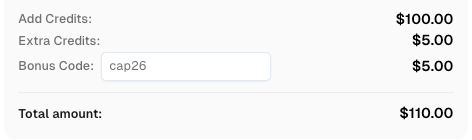
Use code
CAP26when signing up at CapSolver to receive bonus credits!
The future of ai agent frameworks points toward increased specialization and modularity. Developers are moving away from single, monolithic frameworks toward a "best-of-breed" approach, combining tools like LangGraph for control flow, LlamaIndex for RAG, and specialized tools like CapSolver for web interaction.
Another significant trend is the rise of open standards, such as the Model Context Protocol (MCP), which aims to standardize how agents access and share information. This will foster greater interoperability between different frameworks and platforms. Finally, the focus will shift from simply building agents to building agent teams that can operate continuously and autonomously, requiring more sophisticated multi-agent orchestration techniques.
The evolution of ai agent frameworks in 2026 provides developers with unprecedented power to create sophisticated, autonomous applications. Whether you prioritize the collaborative power of CrewAI, the data-centric reliability of LlamaIndex, or the state-machine control of LangGraph, the right framework is available to meet your needs.
The true measure of a production-ready agent, however, is its ability to operate reliably in the real world. Do not let complex web challenges be the bottleneck in your autonomous agent development. By pairing your chosen ai agent frameworks with a specialized tool like CapSolver, you ensure your agents can execute their tasks from start to finish.
Ready to build your next-generation autonomous agent? Start by selecting one of the top ai agent frameworks discussed here and immediately integrate the necessary tools for real-world web interaction. Explore our guide on Best Data Extraction Tools to further enhance your agent's capabilities.
A: LangChain is a general-purpose framework providing components for building LLM applications. LangGraph is an extension of LangChain that specifically introduces the concept of a state machine, allowing developers to define complex, cyclical, and self-correcting workflows for autonomous agents. LangGraph is better suited for advanced, non-linear agent logic.
A: CrewAI and AutoGen are the two leading frameworks for multi-agent systems. CrewAI is preferred for its structured, role-based approach, which is excellent for defining clear team hierarchies. AutoGen is better for dynamic, conversational, and negotiation-based multi-agent interactions.
A: Most ai agent frameworks integrate with RAG (Retrieval-Augmented Generation) systems, primarily through frameworks like LlamaIndex. The agent uses its planning capabilities to determine what information it needs, and the RAG system retrieves the relevant context from external data sources to ground the LLM's response.
A: AI agents often need to interact with web applications to gather data or perform actions. These interactions frequently trigger sophisticated web challenges (like CAPTCHAs) designed to block automated traffic. CapSolver provides the agent with the programmatic ability to solve these challenges, ensuring the agent's workflow is not interrupted by real-world web security measures.
A: The best approach in 2026 is often a hybrid one. Open-source frameworks (like AutoGen or LangGraph) offer maximum customization and control over the core agent logic. Commercial platforms often provide managed infrastructure, monitoring, and easier deployment. Many enterprises combine the flexibility of open-source ai agent frameworks with the reliability of commercial cloud services.
Emma Foster
Machine Learning Engineer
Where machine learning meets practical AI tooling.
ABOUT THE AUTHOR
Discover how AI agents transform web scraping and competitive intelligence. Learn about automated data collection, anti-bot challenges, and CAPTCHA solutions for scalable workflows.

Discover the key differences between AI agent vs chatbot. Learn how agentic AI outperforms traditional AI in automation, decision-making, and complex workflows.