🎉NEWCapSolver for AI agents-MCP, agent tools, and SDK integrations

Ethan Collins
AI Agent Workflow Engineer
Published Apr 09, 2026
Updated Apr 09, 2026 · min read
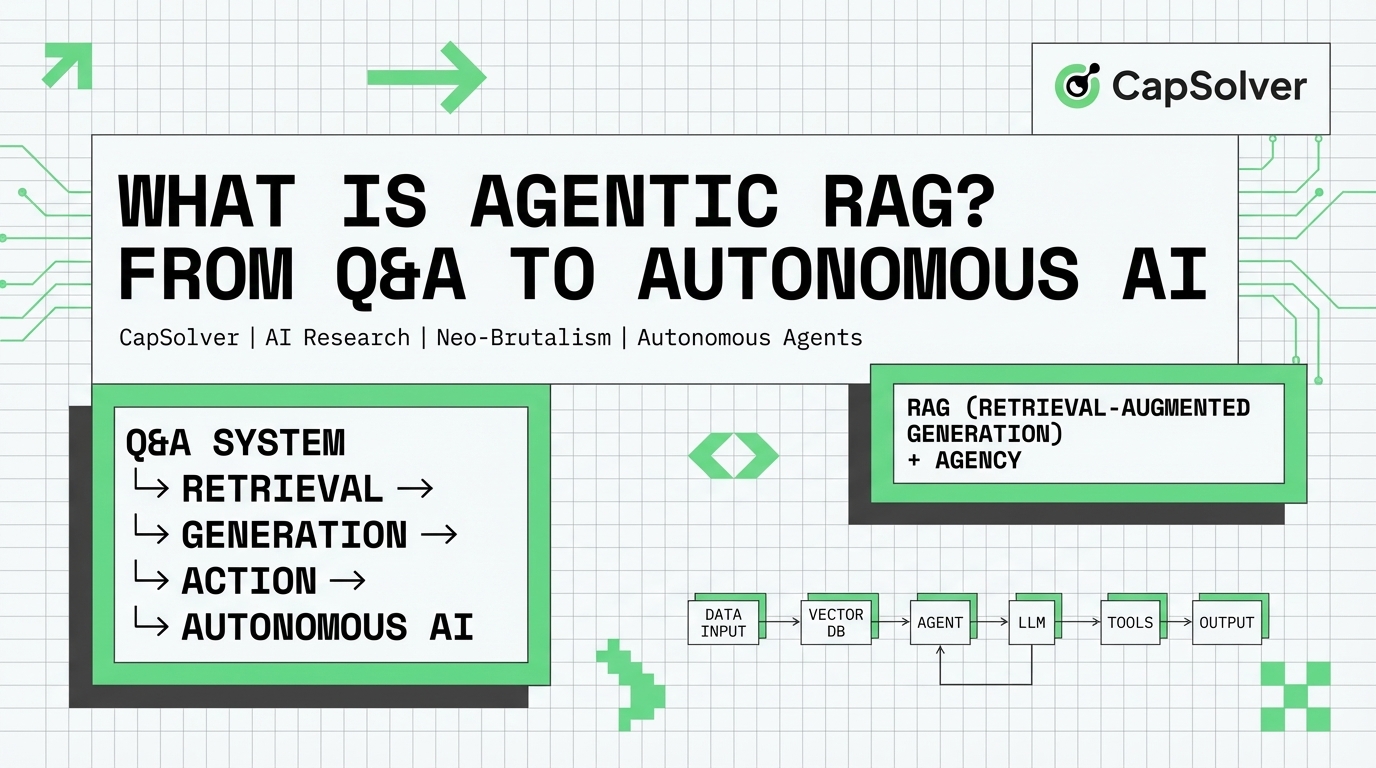
Imagine you are the CEO of a large enterprise. Your company has accumulated decades of documents, reports, customer data, and industry research, but these valuable knowledge assets are scattered across various systems, and employees spend a significant amount of time searching for information every day. Worse still, when you ask an AI assistant, "How was our customer satisfaction in a certain region last quarter?" it either gives an irrelevant answer or hallucinates data.
This is the core problem that Retrieval-Augmented Generation (RAG) technology aims to solve. This article will take you deep into the three evolutionary forms of RAG—Basic RAG, Graph RAG and Agentic RAG revealing how they act like three different levels of enterprise consultants, progressively enhancing AI intelligence and business value.
Architecture Principle Diagram:
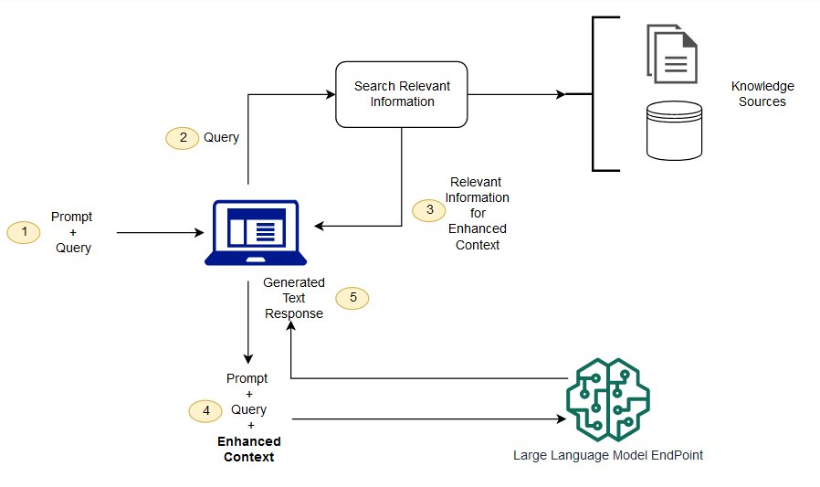
Core Mechanism:
Basic RAG is metaphorically like a diligent librarian. When you ask about "a company's financial status," it quickly runs to the bookshelf to find the latest annual reports, financial statements, and related analyses, then hands these materials to you for reference. It doesn't invent data but ensures that every sentence is verifiable. For organizations starting their journey, understanding how AI LLM practices integrate with these retrieval systems is the first step toward reducing hallucinations.
Architecture Principle Diagram:
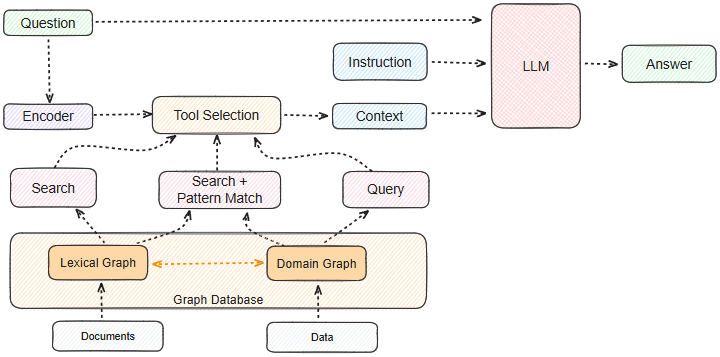
Core Mechanism:
Graph RAG is like a strategic analyst who excels at interpersonal relationships. It doesn't just know "Jack works at Company A"; it understands that "Jackis the CTO of Company A, Company A and Company B are competitors, and Company B recently received investment from Company C." When you ask "Who is Jack?", it analyzes the entire relationship network to provide deep insights. This evolution is part of a broader trend where enterprise knowledge systems evolve to handle complex, theme-level queries.
Architecture Principle:
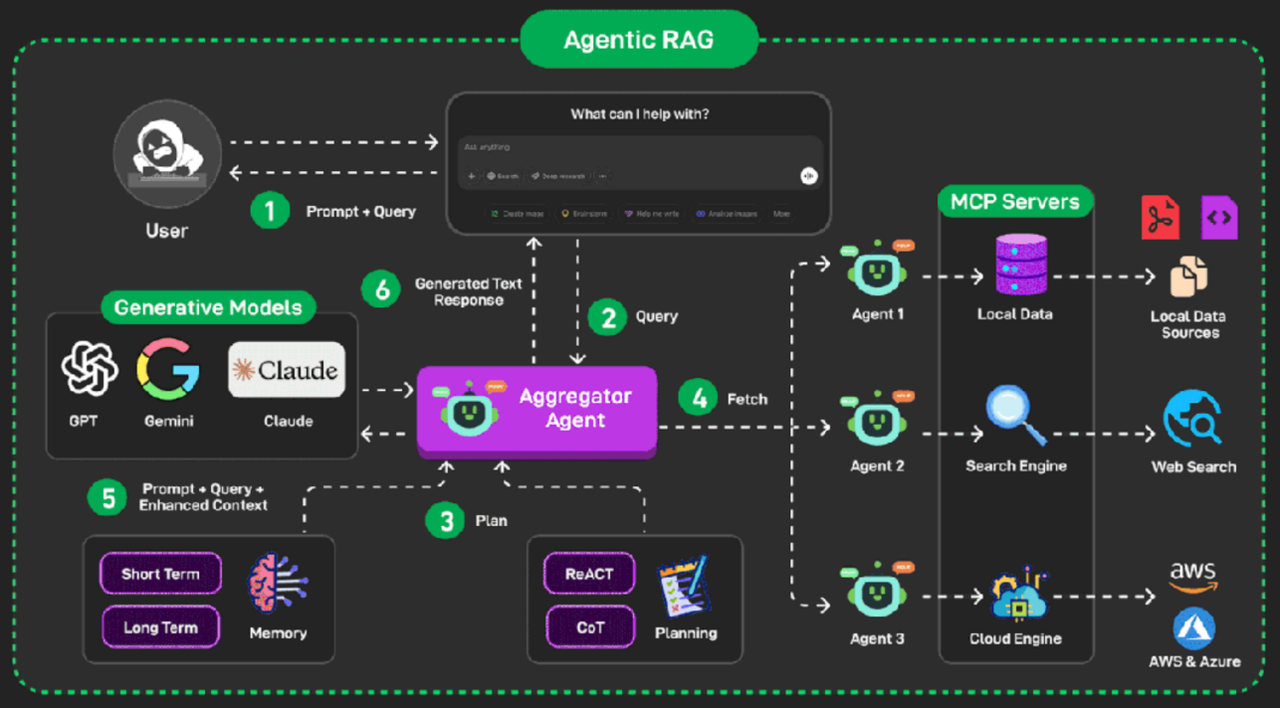
Core Mechanism:
Compared to Basic and Graph RAG, Agentic RAG is more like a highly autonomous project manager. When you say "Help me prepare next quarter's marketing plan," it doesn't just retrieve documents; it:
RAG technology was born to solve the problems of LLM "hallucinations" and knowledge lag. Early Basic RAG was like an efficient information clerk—you ask, it searches the knowledge base, and hands it to the LLM. It significantly improved accuracy and reduced hallucination risks by over 70%, with an ROI of 150%–300%.
However, as business complexity grew, enterprises discovered the bottleneck of Basic RAG: it could only answer "what," but struggled with "why" and "what else." Thus, Graph RAG emerged, overlaying a knowledge graph on top of vector retrieval to track multi-hop relationships. This supports deep reasoning tasks like fraud network identification and supply chain risk transmission, increasing relationship mining depth by 3x.
Yet, Graph RAG remains passive—it requires a human to ask questions and only provides analytical conclusions without executing actions. When enterprises want AI to not just "analyze" but also "act," Agentic RAG becomes the inevitable choice. It adds three core capabilities:
This transition from "information retrieval tool" to "relationship reasoning consultant" to "autonomous action agent" is essential for creating "digital employees" capable of end-to-end work. Leading platforms are already identifying the best AI agents that can handle these complex workflows.
| Dimension | Basic RAG | Graph RAG | Agentic RAG |
|---|---|---|---|
| Advantages | • Fast deployment, low cost • Significant hallucination reduction • Real-time access to business data |
• Deep relationship reasoning • Discovers hidden connections (e.g., fraud networks) • High explainability |
• End-to-end automation, 50–80% labor savings • Connects CRM/ERP/BI systems • Dynamically adapts to environment changes • Single agent can handle dozens of tasks |
| Disadvantages | • Cannot handle multi-hop complex questions • Retrieval quality depends on vector accuracy • No action capability |
• High cost of knowledge graph construction/maintenance • Still passive analysis, cannot execute • Low utilization of unstructured data |
• High compute demand (+40–80% cost) • Autonomous decisions need human oversight • Longer deployment (3–6 months) • Needs to handle tool call exceptions (e.g., CAPTCHAs) |
| ROI Range | 150–300% | 200–400% | 300–600% |
While Agentic RAG requires higher initial investment, its efficiency gains (80%+ workflow automation) and labor savings far exceed the others. It can complete tasks that Basic and Graph RAG simply cannot—such as automatically monitoring inventory, generating purchase orders, and adjusting prices. This "query-to-action" loop makes it the most commercially attractive direction, as noted in Agentic RAG enterprise benefits reports.
Agentic RAG can penetrate almost all enterprise processes requiring "human + system" collaboration—customer service, internal knowledge bases, sales, marketing, financial risk control, and R&D.
| Capability Dimension | Basic RAG | Graph RAG | Agentic RAG |
|---|---|---|---|
| Core Task Type | Single-hop Q&A, fact query | Multi-hop reasoning, relationship mining | Multi-step, cross-system, closed-loop execution |
| Interaction Mode | Passive response | Passive response | Active planning + execution |
| Data Scope | Static knowledge base/docs | Knowledge graph + docs | Multi-source heterogeneous systems (real-time) |
| Auto-call Tools/APIs | ❌ | ❌ | ✅ |
| Handle Open Long-flow | ❌ | Partial (reasoning only) | ✅ (including action) |
| Typical Task Completion | 95%+ (simple) | 70–85% (complex reasoning) | 80–95% (end-to-end complex tasks) |
| Deployment Cycle | 2–4 weeks | 2–3 months | 3–6 months |
| Applicable Scenarios | 30+ | 15–20 | 50+ (almost all business lines) |
Agentic RAG integrates retrieval, analysis, and execution into a complete business loop. For example, starting from a customer inquiry, it can automatically retrieve the knowledge base, analyze the cause, generate a ticket, update CRM tags, and trigger a personalized solution. By connecting to enterprise systems via interfaces, it achieves multi-system synergy and self-correction based on feedback, upgrading AI from a "search tool" to a truly executable "intelligent agent."
Agentic RAG is hailed as the closest form to a "true intelligent agent." However, when this "autonomous project manager" attempts to access web pages via the Model Context Protocol (MCP) to obtain real-time market data or competitor dynamics, a simple yet headache-inducing problem arises: CAPTCHAs.
Imagine your Agentic RAG system is tasked with "analyzing competitor Q3 financial reports and generating a response strategy." It confidently plans: Step 1, search for the latest reports; Step 2, scrape the official website; Step 3, cross-verify industry data. But when it accesses the target site via an MCP tool, it's met not with data, but with a silent reCAPTCHA v3 score or a Cloudflare Turnstile "Please verify you are human" popup.
This is a universal dilemma for Agentic RAG in real-world web scenarios:
If Agentic RAG cannot break through this "digital gatekeeper," its autonomous action capability will be stuck at the starting line, and its reasoning will remain a castle in the air. This is why web automation keeps failing on CAPTCHA without specialized solutions.
How can Agentic RAG efficiently and stably cross CAPTCHA obstacles without violating compliance? The answer is introducing specialized CAPTCHA solving tools like CapSolver.
If Agentic RAG is a market researcher, then CapSolver is his "passport specialist." Whether the website uses reCAPTCHA, Cloudflare Turnstile, or AWS WAF, CapSolver can quickly issue a "passport." It acts like a "locksmith" proficient in all entry systems, capable of:
When an Agentic RAG's MCP tool encounters a CAPTCHA, the process can be extended:

as a CAPTCHA solving service designed for automation, CapSolver is integrated into the toolchain. The system automatically sends the CAPTCHA context to CapSolver, which completes the solution in milliseconds, allowing the agent to pass smoothly.
| Dimension | CapSolver Performance | Value to Agentic RAG |
|---|---|---|
| Supported Types | reCAPTCHA, Cloudflare, AWS WAF, GeeTest, etc. (20+ types) | Covers 95%+ of mainstream scenarios; no need for custom logic per site. |
| Accuracy | Overall success rate ≥ 96% | Task failure rate < 5%, avoiding workflow rollbacks. |
| Response Speed | Simple: < 1s; reCAPTCHA: < 3s; Complex: 4–6s | 5–10x faster than manual input, ensuring real-time performance for price monitoring AI agents. |
The entire process is transparent to the upper business logic. Agentic RAG maintains its "plan → call → optimize" loop as if the CAPTCHA never existed.
Integrating CapSolver into the Agentic RAG MCP toolchain is not just a functional supplement; it is the critical infrastructure that allows intelligent agents to run in the open internet. This integration brings three levels of core value:
First, a significant increase in task completion rates.
Without CAPTCHA recognition, automation success rates are often below 60%. With CapSolver, AI agents can access pages as smoothly as human users, raising end-to-end success rates to 92%–97%. This is vital for 24/7 unattended operation.
Second, the full release of real-time data acquisition capabilities.
Many scenarios, such as financial monitoring or competitor price tracking, require high data timeliness. CapSolver's millisecond recognition allows Agentic RAG to obtain the latest information without lag. For enterprise decision-making, this means updating data in minutes rather than days. Developers can learn more about integrating CapSolver with WebMCP to achieve this.
Third, the cost advantage of large-scale automated tasks.
Manual CAPTCHA solving costs $0.05–$0.20 per instance. CapSolver's automated approach costs approximately $0.0002–$0.002, which is 1/100th to 1/250th of the manual cost. In large-scale data collection, this difference is massive, reducing overall system operating costs by 40%–60%.
Try it yourself! Use code
CAP26when signing up at CapSolver to receive bonus credits!
In short, this integration transforms Agentic RAG from a "theoretical agent" into an enterprise-grade automated data system capable of long-term operation in real network environments.
From Basic RAG to Graph RAG, and finally to Agentic RAG, we have witnessed the evolution of AI in enterprise knowledge management—from a simple query tool to a relationship reasoning consultant, and finally to a "digital employee" that can autonomously plan, execute, and iterate. In this process, Agentic RAG not only integrates heterogeneous data but also leverages CapSolver to break through CAPTCHA barriers, providing real-time, comprehensive, and actionable intelligent decision support.
When AI truly possesses the "understand-execute-self-optimize" loop, enterprises no longer rely solely on manual search and analysis. They have a 24/7, low-cost, high-efficiency intelligent assistant that makes knowledge assets truly "alive," driving business innovation. The combination of Agentic RAG and CapSolver makes this vision a stable reality—intelligent agents have become the core force for enterprises to win a competitive advantage.
1. What is the main difference between Basic RAG and Agentic RAG?
Basic RAG is a passive information retrieval system that answers direct questions by finding relevant documents. Agentic RAG is an active, autonomous system that can understand complex goals, break them down into steps, use various tools (like web browsers or APIs), and execute a plan from start to finish, much like a human project manager.
2. Why is Agentic RAG considered the future of enterprise AI?
Agentic RAG is considered the future because it moves beyond simple data retrieval to end-to-end task automation. It can connect disparate enterprise systems (CRM, ERP, BI), act on information, and adapt to new situations without human intervention. This creates a "digital employee" that can handle complex workflows, leading to significant efficiency gains and cost savings (50-80% labor reduction).
3. What is the biggest challenge for Agentic RAG in real-world applications?
The biggest challenge is accessing live, real-world data from the web, as much of it is protected by CAPTCHAs and other anti-bot measures. Without the ability to bypass these barriers, an Agentic RAG system cannot reliably gather the external information needed to perform tasks like market analysis, competitor tracking, or price monitoring.
4. How does CapSolver help Agentic RAG?
CapSolver acts as a specialized tool in the Agentic RAG's toolchain, providing an "intelligent key" to bypass CAPTCHAs. When the AI agent encounters a CAPTCHA, it automatically calls the CapSolver API to solve it in real-time. This allows the agent to seamlessly access protected websites, ensuring high task completion rates (over 92%) and enabling true automation on the open internet.
5. Is Agentic RAG difficult to implement?
Compared to Basic RAG, Agentic RAG is more complex and has a longer deployment cycle (3–6 months). It requires higher compute resources and careful planning for tool integration and human oversight. However, its potential for a much higher ROI (up to 600%) and its ability to automate entire workflows make it a highly valuable long-term investment for enterprises.
Ethan Collins
AI Agent Workflow Engineer
Building clearer handoffs between AI agents and tools.
ABOUT THE AUTHOR
Discover how AI agents transform web scraping and competitive intelligence. Learn about automated data collection, anti-bot challenges, and CAPTCHA solutions for scalable workflows.

Discover the key differences between AI agent vs chatbot. Learn how agentic AI outperforms traditional AI in automation, decision-making, and complex workflows.