🎉NEWCapSolver for AI agents-MCP, agent tools, and SDK integrations

Emma Foster
Machine Learning Engineer
Published Oct 28, 2025
Updated Oct 28, 2025 · min read
As web scrapers and automation engineers devise new methods to gather data, security providers like Amazon Web Services (AWS) continuously strengthen their defenses. Among the most formidable of these defenses is the AWS WAF CAPTCHA a sophisticated challenge mechanism designed to filter legitimate human traffic from malicious bots. For any serious automation project, learning how to effectively solve AWS WAF CAPTCHA is not merely a convenience—it is a technical necessity.
This article shifts the focus from a simple product tutorial to a strategic engineering deep dive. We will explore the dual nature of the AWS WAF CAPTCHA challenge (token-based and image-based) and present the technical methodologies, including the essential code structures, required to integrate a robust, AI-powered solution from services like CapSolver into your high-performance automation pipelines.
AWS WAF's CAPTCHA action is an integral part of its bot control strategy. When a request is flagged as suspicious, the WAF does not simply block it; it issues a challenge. This challenge primarily manifests in two forms, each requiring a distinct technical approach for automated resolution.
The most common and challenging form for scrapers is the token-based verification. This mechanism relies on the client successfully executing a JavaScript challenge and receiving a valid, time-limited aws-waf-token. This token is then included in subsequent requests (usually as a cookie or a header) to prove the client is a legitimate, non-automated browser.
The complexity lies in the fact that the token generation process is intentionally obfuscated and frequently updated by AWS. To bypass this, an automation solution must:
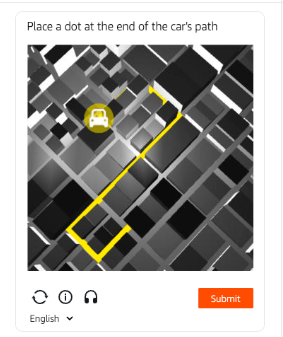
awsKey, awsIv, awsContext) embedded in the challenge page.aws-waf-token.The image-based challenge is more visually familiar, often requiring the user to identify specific objects within a grid, similar to older CAPTCHA formats. While seemingly simpler, automating this requires a high-accuracy computer vision model trained specifically on the unique image sets and question formats used by AWS WAF.
The solution process involves:
Choosing the right integration strategy is crucial for scalability. While browser extensions offer a quick start for debugging or small-scale tasks, direct API integration is the undisputed choice for enterprise-level web scraping and high-volume data aggregation. For a comparison of scalable solvers, see the discussion on the best CAPTCHA solvers for SERP data extraction.
| Feature | Browser Extension (e.g., CapSolver Extension) | API Integration (e.g., CapSolver API) |
|---|---|---|
| Primary Use Case | Debugging, small-scale, quick testing | Large-scale data acquisition, high-performance systems |
| Scalability | Limited by browser instance overhead | Highly scalable, parallel processing possible |
| Resource Overhead | High (full browser rendering required) | Low (pure HTTP requests) |
| Flexibility | Medium (tied to browser environment) | High (integrates into any language/framework) |
| Recommended for | Initial development, manual checks | Production environments, continuous operation |
Regardless of the challenge type, the core of the solution involves leveraging a third-party service like CapSolver to offload the complex AI-driven task of solving the CAPTCHA. The following code snippets illustrate how to integrate this capability into popular automation frameworks, ensuring that your scripts can seamlessly overcome the AWS WAF barrier.
Redeem Your CapSolver Bonus Code
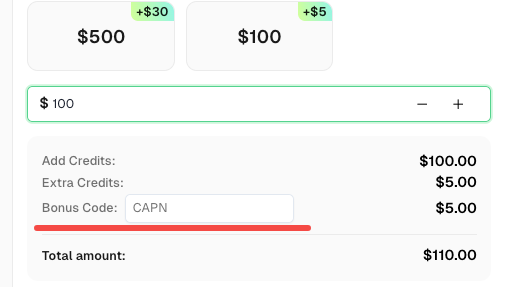
Don’t miss the chance to further optimize your operations! Use the bonus code CAPN when topping up your CapSolver account and receive an extra 5% bonus on each recharge, with no limits. Visit the CapSolver Dashboard to redeem your bonus now!
The choice of integration method significantly impacts the overall performance and cost efficiency of your scraping operation. For high-throughput requirements, the API-based approach is superior because it eliminates the resource-intensive overhead of launching a full browser instance for every CAPTCHA challenge. A well-architected API solution can handle hundreds of concurrent CAPTCHA resolution requests, allowing for massive parallelization. This efficiency is critical in time-sensitive data acquisition, such as real-time price monitoring or large-scale market research. Furthermore, services that offer proxy-less solutions, like the AntiAwsWafTaskProxyLess mentioned, reduce network complexity and potential points of failure, streamlining the entire automation pipeline. Optimizing the polling mechanism for the task results is another engineering detail that can shave off valuable milliseconds, ensuring your scraper spends less time waiting and more time acquiring data.
For scenarios where a full browser environment (like Puppeteer or Selenium) is necessary for other tasks (e.g., handling complex JavaScript rendering), loading a CAPTCHA-solving extension can simplify the process.
Puppeteer (Node.js) Example:
This code demonstrates launching a headless browser with the CapSolver extension loaded, allowing the extension to automatically handle any AWS WAF CAPTCHA that appears during navigation.
const puppeteer = require("puppeteer");

(async () => {
  const pathToExtension = "/path/to/your/capsolver_extension_folder"; // Update with the correct path
  const browser = await puppeteer.launch({
    headless: false,
    args: [`--disable-extensions-except=${pathToExtension}`, `--load-extension=${pathToExtension}`],
  });
  const page = await browser.newPage();
  await page.goto("https://your-target-website.com"); // Replace with the website protected by AWS WAF
})();
Selenium (Python) Example:
Similarly, in a Python-based Selenium script, the extension is loaded via Chrome options, making the CAPTCHA resolution transparent to the main script logic.
from selenium import webdriver

chrome_options = webdriver.ChromeOptions()
chrome_options.add_extension("./capsolver_extension.zip")  # Path to the zipped extension file
driver = webdriver.Chrome(options=chrome_options)
driver.get("https://your-target-website.com") # Replace with the website protected by AWS WAFFor maximum performance and scalability, direct API interaction is preferred. The following JSON structure outlines the request for solving the token-based AWS WAF challenge using a service like CapSolver, which uses the AntiAwsWafTask to return the necessary token. The official documentation for this task type can be found in the AWS WAF CAPTCHA Token Documentation.
API Request Structure for Token-Based AWS WAF CAPTCHA:
The service handles the complex logic of interacting with the AWS challenge script and returns the crucial aws-waf-token in the response's cookie field.
{
  "clientKey": "YOUR_API_KEY",
  "task": {
    "type": "AntiAwsWafTaskProxyLess",
    "websiteURL": "https://your-target-website.com",
    "awsKey": "...",
    "awsIv": "...",
    "awsContext": "..."
  }
}
API Request Structure for Image-Based AWS WAF CAPTCHA:
For the visual challenges, the task type changes to classification, requiring the image data and the question as inputs.
{
  "clientKey": "YOUR_API_KEY",
  "task": {
    "type": "AwsWafClassification",
    "websiteURL": "https://your-target-website.com",
    "images": ["/9j/4AAQSkZJRgAB..."], // Base64 encoded image
    "question": "aws:grid:chair" // The question to be answered
  }
}While the techniques to solve AWS WAF CAPTCHA are powerful, it is paramount that they are used responsibly. The goal of ethical web scraping is to acquire publicly available data without negatively impacting the target website's performance or violating its terms of service.
Best Practices for Ethical Automation:
robots.txt: Always check and adhere to the rules defined in the target site's robots.txt file.The evolution of AWS WAF CAPTCHA represents a significant technical challenge for the automation community. However, by understanding the underlying token and image-based mechanisms and employing sophisticated, AI-driven solutions, engineers can successfully integrate CAPTCHA resolution into their scalable data pipelines. The future of web automation lies in the strategic use of these technologies to ensure uninterrupted and efficient data flow.
1. Why is the AWS WAF CAPTCHA so difficult to solve compared to reCAPTCHA?
AWS WAF CAPTCHA often presents a more complex challenge because it is a two-part defense: a token-based JavaScript challenge followed by an image classification puzzle. The token generation is proprietary and frequently updated, making simple script execution insufficient. It requires a specialized AI model, like those used by CapSolver , that is constantly trained on the latest AWS challenges to extract the necessary parameters and solve the puzzle accurately.
2. Can I use a free or open-source CAPTCHA solver for AWS WAF?
Due to the proprietary nature and constant evolution of the AWS WAF challenge, free or open-source solvers are generally ineffective. They lack the continuous maintenance, sophisticated AI models, and real-time updates required to successfully bypass the token-based challenge. Reliable solutions must be subscription-based to support the necessary research and development infrastructure.
3. Is it possible to solve AWS WAF CAPTCHA without using a third-party service?
While technically possible to reverse-engineer the token generation script, it is highly impractical for most engineering teams. It demands significant, continuous effort to maintain the bypass mechanism as AWS frequently updates its WAF. Using a dedicated third-party service is the most cost-effective and reliable strategy for maintaining a stable, high-performance automation pipeline.
Emma Foster
Machine Learning Engineer
Where machine learning meets practical AI tooling.
ABOUT THE AUTHOR
Use the official Go SDK for an AWS WAF CAPTCHA task, set HTTPS explicitly, supply documented parameters, and check the returned cookie before continuing.

Build an authorized AWS WAF LangChain workflow with CapSolver tools, response detection, policy gates, session handling, retries, and verification.