
🎉NEWCapSolver for AI agents-MCP, agent tools, and SDK integrations

Lucas Mitchell
Automation Engineer
Published Sep 26, 2025
Updated Sep 26, 2025 · min read
As a technology enthusiast and advocate for streamlined web automation practices, I’m constantly exploring the tools and techniques that allow developers to navigate complex web security systems. One of the most pressing challenges in modern web automation is overcoming AWS WAF CAPTCHA—a task requiring precision, technical knowledge, and effective tooling.
In 2025, with increasingly sophisticated CAPTCHA mechanisms, having a reliable AWS WAF solver is crucial for maintaining smooth automated workflows. Whether you’re an experienced developer or new to automated web interactions, this article will equip you with the knowledge and tools to overcome AWS WAF and access the data you need. By the end of this article, you'll have a clear understanding of how to solve AWS WAF challenges and be able to implement these solutions in your own projects.
AWS WAF(Web Application Firewall) CAPTCHA is one of the most commonly encountered security challenges in web automation and scraping tasks. It primarily uses puzzle- or image-based verification, but also collects behavioral and browser data to prevent automated bots from bypassing it. While essential for security, WAFs often pose significant obstacles for legitimate web scraping activities. The challenges of working with AWS WAF include:

AWS WAF helps protect websites from automated bots, filter malicious traffic, and restrict access to sensitive data and applications. Administrators can customize rules based on IP reputation, geolocation, and user behavior, making it an effective tool against DDoS attacks, credential stuffing, and other cyber threats.
But it can also introduce significant challenges to developers performing automated tasks such as price monitoring, market intelligence, or content aggregation, AWS WAF CAPTCHA can disrupt workflows:
Overcoming these hurdles is crucial for anyone involved in data collection, market research, or competitive analysis.
Selecting the right solution to handle AWS WAF CAPTCHA requires evaluating:
CapSolver stands out as a premier solution for AWS WAF challenges due to several key advantages:
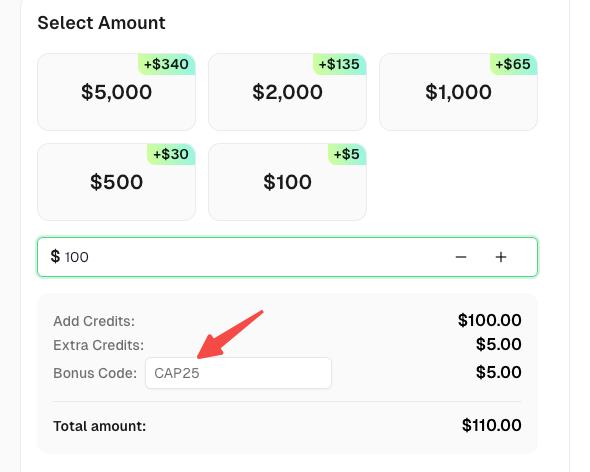
Don’t miss the chance to further optimize your operations! Use the bonus code CAP25 when topping up your CapSolver account and receive an extra 5% bonus on each recharge, with no limits. Visit the CapSolver Dashboard to redeem your bonus now!
To simplify the process of solving AWS WAF challenges with CapSolver, follow this detailed guide:
Ensure you have the requests library installed in your Python environment to interact with CapSolver’s API:
pip install requestsObtain your CapSolver API key from the CapSolver dashboard. Replace the placeholder YOUR_API_KEY with your actual API key:
CAPSOLVER_API_KEY = "YOUR_CAPSOLVER_API_KEY"You'll need to collect the site key (a unique identifier for the AWS WAF) and site URL for the page where the challenge appears.
site_key = "6Le-wvkSAAAAAPBMRTvw0Q4Muexq9bi0DJwx_mJ-"  # Replace with your site's AWS key
site_url = "https://efw47fpad9.execute-api.us-east-1.amazonaws.com/latest" # Replace with your site's URLNow, integrate CapSolver API into your code. The following Python script sends a request to create a task and retrieves the CAPTCHA token for validation:
import requests
import re
import time

# Your CapSolver API Key
CAPSOLVER_API_KEY = "YOUR_CAPSOLVER_API_KEY"
CAPSOLVER_CREATE_TASK_ENDPOINT = "https://api.capsolver.com/createTask"
CAPSOLVER_GET_TASK_RESULT_ENDPOINT = "https://api.capsolver.com/getTaskResult"

# The URL of the website protected by AWS WAF
WEBSITE_URL = "https://efw47fpad9.execute-api.us-east-1.amazonaws.com/latest" # Example URL

def solve_aws_waf_captcha(website_url, capsolver_api_key):
    client = requests.Session()
    response = client.get(website_url)
    script_content = response.text

    key_match = re.search(r'"key":"([^"]+)"', script_content)
    iv_match = re.search(r'"iv":"([^"]+)"', script_content)
    context_match = re.search(r'"context":"([^"]+)"', script_content)
    jschallenge_match = re.search(r'<script.*?src="(.*?)".*?></script>', script_content)

    key = key_match.group(1) if key_match else None
    iv = iv_match.group(1) if iv_match else None
    context = context_match.group(1) if context_match else None
    jschallenge = jschallenge_match.group(1) if jschallenge_match else None

    if not all([key, iv, context, jschallenge]):
        print("Error: AWS WAF parameters not found in the page content.")
        return None

    task_payload = {
        "clientKey": capsolver_api_key,
        "task": {
            "type": "AntiAwsWafTaskProxyLess",
            "websiteURL": website_url,
            "awsKey": key,
            "awsIv": iv,
            "awsContext": context,
            "awsChallengeJS": jschallenge
        }
    }

    create_task_response = client.post(CAPSOLVER_CREATE_TASK_ENDPOINT, json=task_payload).json()
    task_id = create_task_response.get('taskId')

    if not task_id:
        print(f"Error creating CapSolver task: {create_task_response.get('errorId')}, {create_task_response.get('errorCode')}")
        return None

    print(f"CapSolver task created with ID: {task_id}")

    # Poll for task result
    for _ in range(10): # Try up to 10 times with 5-second intervals
        time.sleep(5)
        get_result_payload = {"clientKey": capsolver_api_key, "taskId": task_id}
        get_result_response = client.post(CAPSOLVER_GET_TASK_RESULT_ENDPOINT, json=get_result_payload).json()

        if get_result_response.get('status') == 'ready':
            aws_waf_token_cookie = get_result_response['solution']['cookie']
            print("CapSolver successfully solved the CAPTCHA.")
            return aws_waf_token_cookie
        elif get_result_response.get('status') == 'failed':
            print(f"CapSolver task failed: {get_result_response.get('errorId')}, {get_result_response.get('errorCode')}")
            return None

    print("CapSolver task timed out.")
    return None

# Example usage:
# aws_waf_token = solve_aws_waf_captcha(WEBSITE_URL, CAPSOLVER_API_KEY)
# if aws_waf_token:
#     print(f"Received AWS WAF Token: {aws_waf_token}")
#     # Use the token in your subsequent requests
#     final_response = requests.get(WEBSITE_URL, cookies={"aws-waf-token": aws_waf_token})
# print(final_response.text)AWS WAF CAPTCHA is a critical line of defense for modern web applications but presents significant challenges for automated workflows. CapSolver offers a reliable solution by handling dynamic tokens, adaptive triggers, and human-like behavioral simulation.
With CapSolver’s advanced API integration, developers can maintain compliance, efficiency, and performance while automating tasks or scraping data from AWS WAF-protected websites.
Q1: What is AWS WAF CAPTCHA and why do I keep getting CAPTCHA verification?
A1: AWS WAF CAPTCHA is a security challenge that uses puzzles, images, or behavioral tracking to distinguish between humans and bots. You encounter them during web scraping when AWS WAF detects suspicious activity, such as a high volume of requests from a single IP address, unusual user-agent strings, or behavioral patterns indicative of a bot.
Q2: Why is solving AWS WAF CAPTCHA difficult in 2025?
A2: The main difficulties include behavioral and fingerprint analysis, dynamically changing image sets, fast-expiring tokens, and integration with multi-layered security systems. These make it harder for traditional scraping tools to bypass without advanced CAPTCHA solvers.
Q3: What is the most effective AWS WAF captcha solver for developers and enterprises?
A3: AI-powered solvers such as CapSolver are currently among the most effective. They are optimized for AWS WAF challenges, integrate with popular automation frameworks, and support enterprise-scale workloads.
Q4: How do I integrate an AWS WAF solver into my Python or automation project?
A4: Integration usually involves using APIs provided by solvers like CapSolver. Developers can create tasks with site keys and challenge parameters, retrieve tokens, and use them in automated requests. CapSolver provides SDKs and clear documentation for Python, Node.js, Golang, and more.
Q5: What are the top strategies to maintain scraping success rates against AWS WAF updates?
A5: Updating request fingerprints, rotating proxies, and using adaptive solvers like CapSolver that learn from new challenges are key to sustaining high success rates.
ABOUT THE AUTHOR
Explore three enterprise uses of CAPTCHA solving for SERP API providers: scheduled ranking feeds, market-research batches, and interactive search-data delivery.

Fix common Selenium CAPTCHA integration problems by checking test configuration, extensions, waits, iframe context, solver responses, and application results.

Learn how AI agents detect CAPTCHAs with the CapSolver Core SDK, run a tested Python example, and separate detection from solving and workflow completion.

Troubleshoot slow CAPTCHA API requests with clear checks for task creation, result polling, errors, token expiry, and the final browser action after solving.